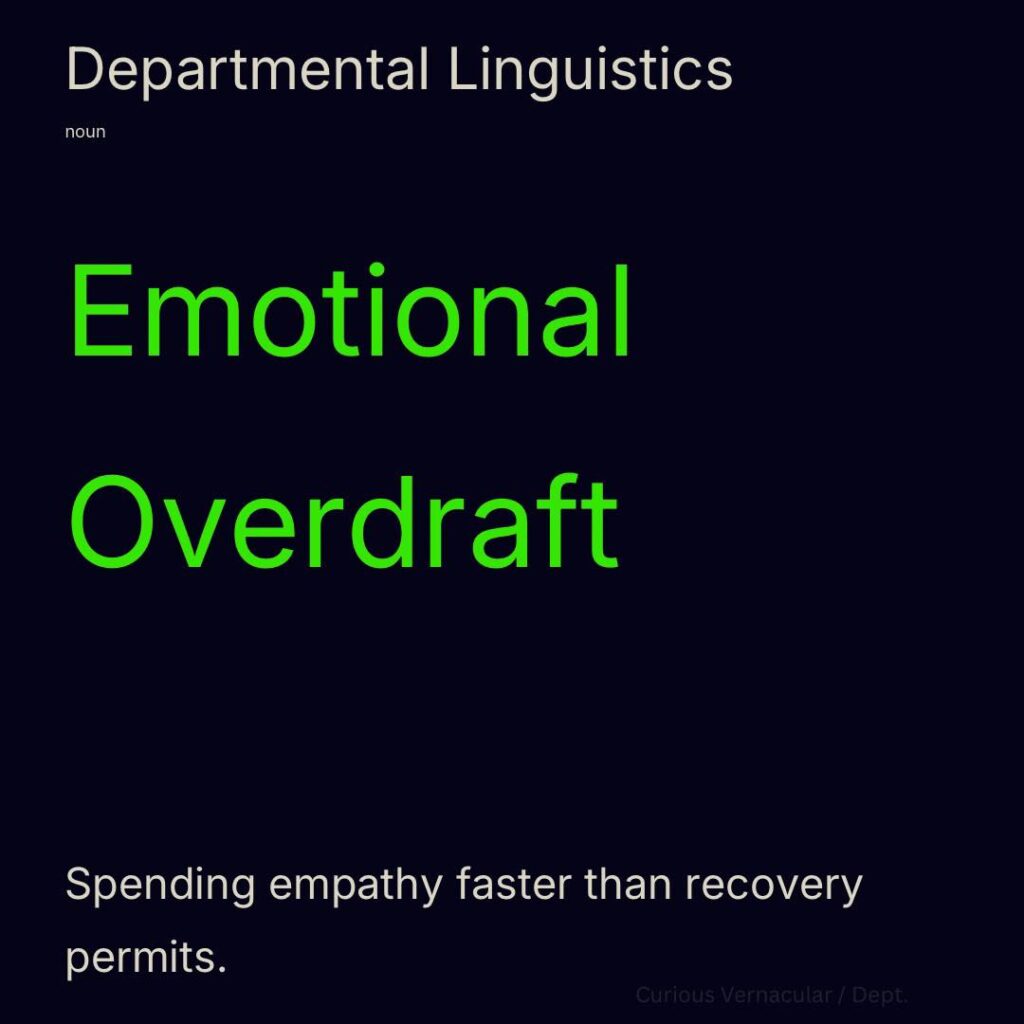
Definition
Emotional Overdraft
noun · energy & regulation / psychological
Emotional Overdraft describes a condition in which emotional energy is repeatedly spent in advance of recovery, creating delayed depletion rather than immediate collapse.
The term is formed from financial overdraft logic applied to emotional regulation. Capacity appears intact in the short term, while cost is quietly deferred.
Emotional Overdraft allows individuals to keep functioning, caring, and responding beyond sustainable limits, often without obvious warning signals until exhaustion arrives all at once.
This pattern is commonly sustained by Role Adhesion and reinforced by Defensive Innocence, where stopping would threaten identity or self-image.
Rating on the term
An individual rates high on Emotional Overdraft when:
- capacity appears stable despite accumulating strain
- rest is postponed rather than unavailable
- collapse arrives without a clear cause
Lower expression appears when energy limits are respected before depletion sets in.
Examples in use
“Emotional Overdraft kept her functional long after her reserves were gone.”
“The crash felt sudden, but Emotional Overdraft had been running for months.”
“Once Emotional Overdraft was named, the guilt around stopping eased.”
The system worked. The account emptied.